
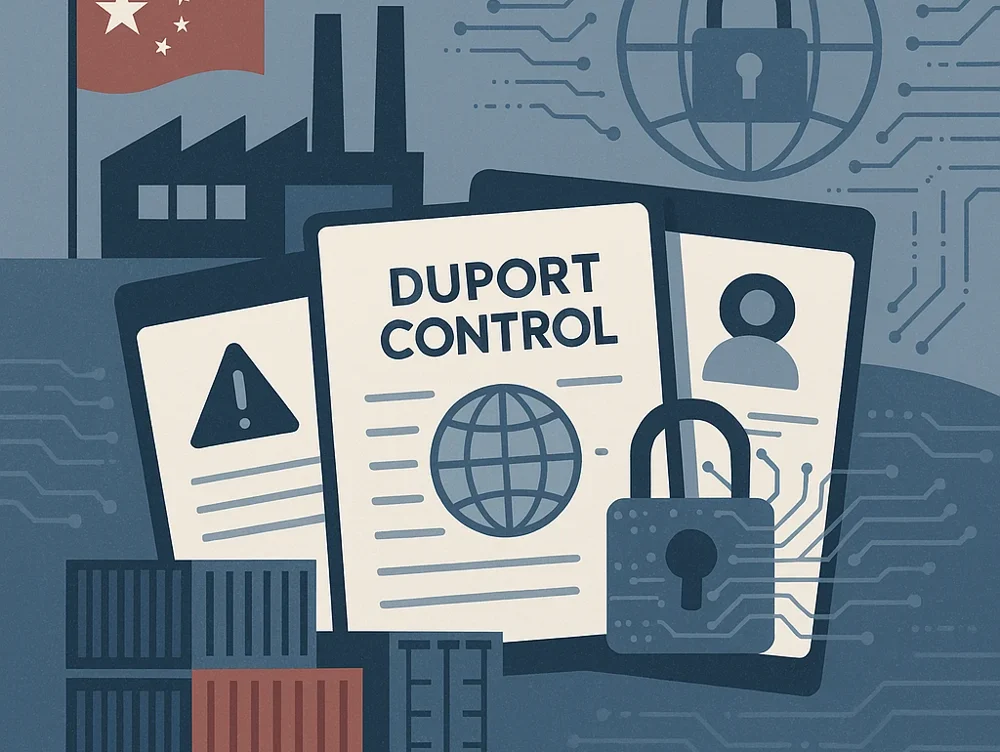
What Chinese Companies Can Learn from the Ban on Dual-Use Exports to Japanese Military Users
China’s recent decision to prohibit the export of dual-use items to Japanese military end-users is more than a diplomatic signal. For enterprises involved in manufacturing, exporting, logistics, or technology, it offers a clear and practical lesson: export compliance has become a core business risk, not a legal formality.
Dual-Use Goods Are No Longer a Gray Area
Dual-use items—products with both civilian and military applications—have traditionally occupied a gray zone in international trade. Many companies assumed that as long as the product itself was “non-weapon,” exports were safe.
That assumption is no longer valid.
The key factor today is end-use and end-user, not just product category. Even widely used industrial components, materials, or technologies can fall under control if the final user is connected to defense or military systems.
For enterprises, this means:
- Product compliance alone is insufficient
- Customer background now matters as much as technical specs
End-User Due Diligence Is Becoming Mandatory
The most important takeaway for companies is the rising importance of end-user screening.
Enterprises can no longer rely solely on:
- Importer declarations
- Trading companies acting as intermediaries
- “Civilian use” statements without verification
Regulators increasingly expect exporters to demonstrate reasonable knowledge of where and how their products will be used. Failure to do so may be interpreted as negligence or willful blindness.
From a business standpoint, this elevates compliance from a paperwork task to a front-end decision-making process.

Compliance Failures Now Carry Strategic Risk
Export violations today are not treated as isolated incidents. They can trigger:
- Blacklisting or loss of export privileges
- Increased inspections across all shipments
- Reputational damage with overseas partners
- Long-term restrictions on overseas expansion
In other words, a single high-risk transaction can affect an entire company’s global strategy.
This is especially relevant for manufacturers of:
- Industrial machinery and components
- Advanced materials
- Electronics, sensors, and control systems
- Specialized chemicals or alloys
Trade Is Becoming Selective, Not Open-Ended
This case also reflects a broader shift in global trade logic.
Trade is no longer purely about market demand or pricing. It is increasingly conditional, shaped by:
- National security concerns
- Geopolitical alignment
- Technology sensitivity
For enterprises, this means market access can change suddenly, even if commercial fundamentals remain strong.
Companies that treat export markets as politically neutral may find themselves exposed.
What Enterprises Should Do Going Forward
From a practical perspective, companies should consider:
- Building an internal export control checklist
Including product classification, end-use risk, and customer background. - Strengthening customer onboarding procedures
Know who the real end-user is—not just the buyer. - Training sales and logistics teams
Compliance is not only a legal department issue. - Working with professional freight forwarders and advisors
Export control risks often surface during shipping and customs clearance.
A Strategic Wake-Up Call
The restriction on dual-use exports to Japanese military users is not an isolated event. It is a signal that compliance capability is now part of corporate competitiveness.
Enterprises that adapt early will protect their market access and long-term growth. Those that ignore these signals may discover—too late—that the rules of global trade have fundamentally changed.